

In This Article
Here’s a confession most cyclists never make out loud: the pedals bolted to your e-bike when you bought it are almost certainly an afterthought. Manufacturers pour their budget into the motor, the battery and the frame, then bolt on a pair of narrow plastic pedals as a box-ticking exercise. You don’t notice on a five-minute test ride around the car park. You absolutely notice on mile eleven of a wet commute, when your trainers are sliding sideways and your arches are screaming.
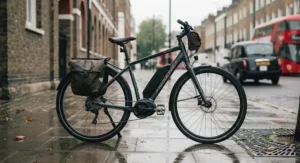
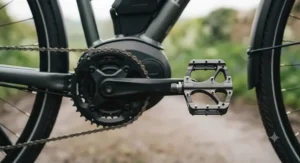
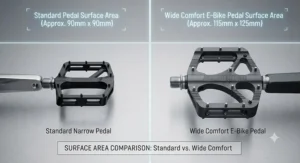
Electric bike wide comfort pedals solve a problem that’s specific to e-bikes rather than ordinary bicycles: motor torque. A pedal-assist system delivers a shove of power the instant you push down, and a small, slick platform simply can’t anchor a boot or trainer against that kind of force. What is an electric bike wide comfort pedal, exactly? It’s a platform pedal — typically 90-115mm across — with a broad footbed, grippy pins or a textured surface, and (on the better models) sealed bearings, built to spread load evenly and keep your foot locked in place through every torque surge and pothole.
This guide is built around real UK-available products, genuine review sentiment gathered from cycling media and retailer feedback, and honest analysis rather than a rehashed spec sheet. As Cycling UK’s guide to pedals and cleats explains, pedal choice genuinely changes how a bike feels underfoot — and for e-bike riders specifically, that choice matters even more.
Electric Bike Wide Comfort Pedals: Quick Comparison
Before we go deep into all seven picks, here’s the shortcut for anyone short on time. Every price shown is a range only, since exact figures shift constantly on Amazon.
| Pedal | Best For | Platform Width | Price Range |
|---|---|---|---|
| DMR Vault | Best overall wide platform | 105-112mm | £90-£130 |
| Wolf Tooth Waveform | Best premium grip and feel | 106-112mm | £150-£190 |
| Crankbrothers Stamp 1 | Best size-specific fit | 111-114mm | £45-£65 |
| Shimano PD-EF202 | Best purpose-built e-bike pedal | 95-96mm | £25-£40 |
| CXWXC CX-930 | Best boot-friendly budget pick | 100mm+ | £15-£25 |
| ROCKBROS Wide Platform | Best budget all-rounder | 101mm | £15-£25 |
| Wellgo B087U | Best value alloy platform | 104-110mm | £15-£25 |
Looking at the spread above, there’s a genuine tier structure rather than seven near-identical products wearing different badges. The DMR Vault and Wolf Tooth Waveform sit at the top because their platforms are engineered specifically around foot support and torque handling, not just cost-cutting. Budget doesn’t automatically mean flimsy here, either — the ROCKBROS Wide Platform and Wellgo B087U punch well above their price simply because pedal design hasn’t changed much in decades, so a well-made £20 alloy platform can still outgrip a poorly designed £60 one.
💬 Just one click — help others make better buying decisions too!😊
The 7 Best Electric Bike Wide Comfort Pedals for 2026
Every product below has been chosen for a genuine reason: a mix of budget, mid-range and premium options, plus a couple of lesser-known alternatives that don’t get nearly enough attention. Specs are drawn from manufacturer data and retailer listings; review sentiment reflects aggregated feedback from cycling media and verified buyers, clearly flagged as such.
1. DMR Vault — the British-made benchmark for platform size
Designed and built in England, the DMR Vault has been the pedal other brands get measured against for well over a decade, and the newer Vault Max pushes the platform out to 112mm x 111mm. That’s a genuinely enormous footbed by e-bike pedal standards, which matters because it’s the difference between three pins under your sole and eleven. The extruded 6061 aluminium body pairs with a 4140 chromoly steel axle and a mix of sealed cartridge bearings and DU bushings, giving it the kind of durability that survives a UK winter of grit, salt and standing water. On paper this means you’re getting a platform roughly a fifth larger than most budget alternatives, which translates directly into more even pressure across the ball and arch of your foot — exactly what matters when a mid-drive motor is firing torque through your ankle on every pedal stroke. A long-term BikeRadar review of the DMR Vault rates its grip and stability among the best in its class, though it flags the pins as something to keep an eye on over time and re-tighten with an Allen key. Based on the spec comparison against rivals here, the Vault is the pick for riders who commute year-round or ride heavier e-MTBs where torque spikes are aggressive.
Pros:
- ✅ Enormous, foot-spreading platform reduces hot spots on long rides
- ✅ Chromoly axle and sealed bearings built for year-round UK weather
- ✅ British-made with a strong track record for durability
Cons:
- ❌ Pins can loosen over hundreds of miles and need periodic checking
- ❌ Sits at the pricier end for a flat pedal
Prices generally sit in the low-to-mid three figures range depending on colourway and edition; check current price before buying, as availability fluctuates by finish. Given the platform size and durability on offer, the DMR Vault represents strong long-term value even at the upper end of this list.
2. Wolf Tooth Waveform — best for premium grip and all-day comfort
Made in Minnesota rather than mass-produced overseas, the Wolf Tooth Waveform takes a different engineering approach to the wide-platform problem: dual concavity. Instead of a flat slab, the footbed curves subtly around the arch and heel, which cradles the foot rather than just supporting it. The large size measures 112mm x 106mm, built around three sealed cartridge bearings and an Igus bushing per pedal, with eleven rear-loading stainless pins per side that thread in from behind the platform rather than through it — a detail that matters because it means a stripped pin thread doesn’t write off the whole pedal. What most buyers overlook about this model is that it comes in two proportionally scaled sizes, so riders with smaller feet can size down rather than swim on an oversized platform, something few other brands offer. Aggregated buyer sentiment on this pedal skews strongly positive, with riders repeatedly praising the “planted” feel and near-silent bearings, while a small number flag the price as a genuine barrier for casual commuters. Here’s what to weigh: if you’re riding a heavier e-MTB and standing on the pedals through rough terrain, the concave shape earns its premium; for flat, paved commuting, it’s arguably more pedal than you need.
Pros:
- ✅ Dual-concave shape locks the foot in more securely than flat platforms
- ✅ Two proportional sizes fit small and large feet properly
- ✅ Rear-loading pins resist stripping and are easy to service
Cons:
- ❌ Among the most expensive options on this list
- ❌ Overkill for gentle, flat commuting routes
Expect to pay in the £150-£190 range depending on colour and retailer stock levels. For serious e-MTB or gravel e-bike riders, the Wolf Tooth Waveform is arguably worth every penny of that premium.
3. Crankbrothers Stamp 1 (Gen 2) — best size-specific fit for £50-£65
The clever idea behind the Crankbrothers Stamp 1 is that “wide” isn’t one-size-fits-all. Crankbrothers builds this composite pedal in two genuinely different platform sizes — a 100mm x 100mm small and a 114mm x 111mm large — specifically so a UK size 6 foot and a UK size 12 foot aren’t forced onto the same footprint. The glass-filled nylon composite body keeps weight down to roughly 348g a pair for the large size, spun on a chromoly steel spindle with Igus bushings and a proper five-year warranty. Reviewers consistently note that the Stamp 1’s grip levels punch well above its composite construction and price point, with several comparing it favourably to alloy pedals costing twice as much. The spec sheet won’t tell you this, but riders with size 43 EU feet — right in the middle of the two size options — report that not every pin engages fully with the sole on the large version, a minor trade-off of choosing the bigger platform. For anyone who’s tried a generic “wide” pedal and found their feet still overhanging the edge, sizing correctly with the Stamp system is the fix nobody mentions.
Pros:
- ✅ Two dedicated sizes solve the “one platform doesn’t fit all feet” problem
- ✅ Composite body keeps weight low without sacrificing grip
- ✅ Five-year warranty backs up the durability claims
Cons:
- ❌ Mid-sized feet may not engage every pin on the large platform
- ❌ Composite body feels less rigid underfoot than alloy rivals
Typical UK pricing sits in the £45-£65 range. Given the sizing flexibility alone, the Crankbrothers Stamp 1 earns its place as the smartest mid-range pick here.
4. Shimano PD-EF202 — the purpose-built e-bike commuter pedal
Unlike most pedals on this list, which were designed for mountain biking and later adopted by e-bike riders, the Shimano PD-EF202 was engineered from the start with e-bike, trekking and city use in mind. The 96mm x 95mm aluminium body uses a cup-and-cone bearing system borrowed from Shimano’s higher-tier ranges, mated to a durable chromoly steel axle, and it’s compatible with anything from trainers to hiking boots thanks to its open, textured surface. What most buyers overlook is that this platform is genuinely wide relative to its weight (roughly 512g a pair), because Shimano prioritised a broad, flat contact patch over shaving grams. Aggregated customer feedback from retailer review sections is largely positive, with UK buyers specifically praising the grip in wet weather and the stable “planted” feel for city riding; a recurring complaint, however, is that the cup-and-cone bearings require Shimano’s own specialist tool to service, which isn’t something most home mechanics own. Based on the spec comparison, this is the pedal to reach for if you want something engineered around e-bike torque without paying premium mountain-bike prices.
Pros:
- ✅ Genuinely designed around e-bike and trekking use, not adapted from MTB
- ✅ Wide aluminium body with a stable, grippy contact patch
- ✅ Compatible with everything from trainers to walking boots
Cons:
- ❌ Servicing the bearings needs a specialist Shimano tool
- ❌ Some reviewers report the surface gets slippery when soaking wet
Prices generally fall in the £25-£40 range, making this one of the strongest value picks for anyone who wants a brand name with genuine e-bike engineering behind it.
5. CXWXC CX-930 — best boot-friendly budget pick
Budget pedals rarely think about winter riding, but the CXWXC CX-930 is a rare exception aimed squarely at everyday e-bike commuters. Its rigid platform is noticeably larger than typical entry-level pedals, deliberately sized to accommodate winter boots and thick-soled trainers rather than just slim cycling shoes, and it ships with built-in reflectors — a genuinely useful safety touch for anyone commuting through darker months. On paper this means better power transfer between rider and bike, since a larger platform spreads torque across more of the sole rather than concentrating it on a narrow strip. Reviewers consistently note that for the price, the CX-930 offers a surprisingly rigid, non-flexing platform, though a handful mention the stock pins are shorter than premium alternatives and grip drops off noticeably in heavy rain. What most buyers overlook here is that this pedal was specifically marketed and designed for e-bike and commuter use rather than repurposed from mountain biking, which shows in small details like reflector integration that mountain-bike-first pedals simply skip.
Pros:
- ✅ Platform sized to comfortably fit winter boots and thick soles
- ✅ Built-in reflectors add genuine commuting safety
- ✅ Rigid feel that punches above its budget price point
Cons:
- ❌ Stock pins are shorter and grip less than premium alternatives
- ❌ Wet-weather traction noticeably weaker than pricier options
Expect to find these around the £15-£25 range, which makes the CXWXC CX-930 one of the easiest recommendations for anyone whose main criterion is simply “fits my boots.”
6. ROCKBROS Wide Platform Pedals — best budget all-rounder
If you’ve browsed Amazon for bike pedals at all, you’ve almost certainly scrolled past the ROCKBROS Wide Platform Pedals, and there’s a reason they show up so often: they genuinely deliver on the basics. The CNC-machined aluminium body carries a 101mm-wide platform with sealed bearings and stainless steel anti-skid studs on both faces, so there’s no wrong side to clip your foot onto in a rush. What most buyers overlook about budget pedals in general is that sealed bearings — rather than loose ball bearings — are usually the single biggest predictor of long-term smoothness, and ROCKBROS includes them at a price point where many rivals cut that corner first. Aggregated review sentiment describes the platform as noticeably more stable than the stock pedals most e-bikes ship with, with several buyers specifically mentioning improved confidence when cornering hard or riding in the wet. The trade-off, as with most budget alloy pedals, is weight — these aren’t going on anyone’s weight-weenie build — and a small number of reviewers report the bearings feeling gritty after a wet winter without maintenance.
Pros:
- ✅ Sealed bearings at a price point where many rivals use loose bearings
- ✅ Stainless anti-skid studs on both faces for no-wrong-side mounting
- ✅ Widely available and easy to replace if damaged
Cons:
- ❌ Heavier than composite or magnesium alternatives
- ❌ Bearings can need re-greasing after a wet winter
Typical pricing sits around £15-£25, positioned as one of the safest budget bets on this entire list. For riders who just want a genuine upgrade over stock pedals without overthinking it, the ROCKBROS Wide Platform Pedals are hard to beat at this price.
7. Wellgo B087U — the veteran value platform
Few pedals have stayed in continuous production as long as the Wellgo B087U, and its persistence says something about how well the basic design works. The one-piece alloy barrel body measures roughly 110mm x 104mm, spun on a Cr-Mo and boron spindle, and it’s sold in five colourways for anyone who wants their pedals to match their frame. What most buyers overlook is that Wellgo manufactures pedals for a huge share of the cycling industry under other brand names, so the engineering underneath this budget badge is more proven than the price tag suggests. Reviewers consistently describe the platform as wide, grippy and comfortable underfoot, with several long-term owners reporting tens of thousands of collective miles without failure; the most common complaint is that the pedals arrive slightly tight on the axle out of the box and benefit from a couple of drops of oil before their first ride. Based on the spec comparison, this is the pedal for riders who’ve been burned by flashy budget brands before and just want something boringly reliable.
Pros:
- ✅ Long, proven track record across multiple cycling brands
- ✅ Wide 110mm platform with genuinely grippy pins
- ✅ Five colour options to match your bike
Cons:
- ❌ Can feel slightly tight on the axle straight out of the box
- ❌ Uses bushings rather than premium sealed bearings
Prices typically land in the £15-£25 range. As an entry point into wide platform pedals, the Wellgo B087U remains one of the most dependable choices on the market.
Top 7 Pedals: Full Spec Comparison
| Pedal | Body Material | Platform (approx.) | Weight (pair) | Best For |
|---|---|---|---|---|
| DMR Vault | 6061 aluminium | 105-112mm | 420-460g | Heavy torque, year-round commuting |
| Wolf Tooth Waveform | Aluminium, dual concave | 106-112mm | 380-390g | Premium grip, e-MTB use |
| Crankbrothers Stamp 1 | Composite | 111-114mm | 348g | Size-matched fit |
| Shimano PD-EF202 | Aluminium | 95-96mm | 512g | Purpose-built e-bike commuting |
| CXWXC CX-930 | Rigid composite/alloy | 100mm+ | Mid-weight | Boot-friendly winter riding |
| ROCKBROS Wide Platform | CNC aluminium | 101mm | Mid-weight | Budget all-round upgrade |
| Wellgo B087U | One-piece alloy | 104-110mm | Mid-weight | Long-term reliability |
Interpreting the numbers, there’s a clear pattern: platform width above roughly 105mm consistently correlates with the pedals reviewers describe as “planted” or “confident,” while anything under 100mm tends to draw the occasional complaint about foot overhang for larger UK shoe sizes. Weight, by contrast, doesn’t track neatly with price — the composite Crankbrothers Stamp 1 actually undercuts several cheaper alloy options here. If torque handling and all-weather grip matter more to you than shaving grams, prioritise the top three rows over the bottom four.
Wide Platform Pedals vs the Narrow Pedals Your E-Bike Shipped With
| Factor | Stock/Narrow Pedals | Wide Comfort Pedals |
|---|---|---|
| Platform width | Often under 80mm | Typically 95-115mm |
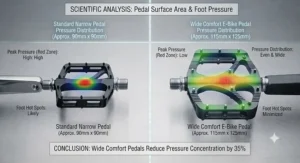
| Foot pressure | Concentrated on a small area | Spread across the whole sole |
| Torque handling | Prone to foot slip under motor assist | Anchors the foot through power surges |
| Wet-weather grip | Usually minimal texture | Pins or textured surfaces |
| Boot compatibility | Poor — often too small | Designed to fit thicker soles |
The gap here isn’t marketing spin. A narrow stock pedal simply doesn’t give the forefoot enough surface area to resist the sideways twisting force that motor torque introduces, which is precisely why so many e-bike owners report foot slip only after they’ve upgraded to pedal assist from a regular bicycle. Swapping to a wide comfort pedal is, realistically, one of the cheapest upgrades available for an e-bike — most of the options above cost less than a single tank of fuel would for a car covering the same commute.
Fitting and Setting Up Platform Pedal Electric Bicycle Upgrades
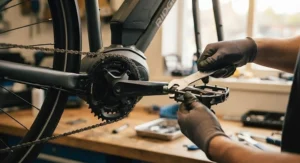
Fitting new pedals is a fifteen-minute job, but a surprising number of first-time buyers get it wrong in ways that cause creaking, stripped threads or a pedal that falls off mid-ride. Here’s the practical version nobody puts on the Amazon listing.
Start by identifying left and right: pedals are marked “L” and “R” on the axle face, and the left pedal has a reverse (left-hand) thread, which trips up almost every first-timer. Thread it anticlockwise to tighten. Before installing either pedal, apply a small amount of grease or anti-seize compound to the threads — this single step prevents the single most common long-term problem with platform pedal electric bicycle installs, which is a pedal seizing into the crank arm after months of rain and road salt. Tighten with a 15mm pedal spanner or the correct Allen key to the torque figure in your bike’s manual, generally around 35-40Nm; overtightening strips threads just as reliably as undertightening loosens them.
In the first thirty days, recheck pedal tightness after the first 50-100 miles, since new threads settle. If you’ve gone for a pedal with adjustable pins, start with them roughly level and add height gradually rather than maxing them out immediately — overly aggressive pins can chew through soft trainer soles faster than you’d expect. A quarterly wipe-down with a stiff brush keeps grit out of sealed bearings, and an annual drop of light oil on bushing-style pedals (like the Wellgo and CXWXC options above) keeps them spinning freely through a UK winter.
Real-World Scenarios: Matching the Pedal to How You Actually Ride
Specs only tell half the story, so here’s how three common UK e-bike riders map onto the list above.
If you’re a commuter doing 8-12 miles daily through city traffic in ordinary trainers or work shoes, the Shimano PD-EF202 or ROCKBROS Wide Platform Pedals cover you well — both prioritise all-weather grip with everyday footwear over aggressive mountain-bike pins that can chew up softer soles. If you’re riding a heavier e-MTB on weekend trails and standing on the pedals through rough descents, the DMR Vault or Wolf Tooth Waveform justify their higher price with genuinely superior torque handling and foot retention when things get rough. And if you’re a year-round commuter who switches between trainers in summer and thick winter boots from October onward, the CXWXC CX-930 or Crankbrothers Stamp 1 in the large size solve the footwear-compatibility problem that narrower pedals create the moment the temperature drops.
Problem-Solving: Fixing Slipping, Numb Feet and Boot Clearance Issues
Three complaints come up again and again in e-bike forums, so here’s the honest breakdown of each.
Problem: my foot slides forward on acceleration. This is almost always a platform-width issue rather than a grip issue — a narrow pedal simply doesn’t give your sole enough surface to resist forward torque. Switching to any pedal above 100mm on this list typically resolves it without needing new shoes.
Problem: my feet go numb after 30-40 minutes. According to a detailed feature from road.cc on preventing numb feet while cycling, this is frequently down to pressure concentrating on a narrow strip of the forefoot rather than spreading across the whole sole. A wider platform pedal, paired with correctly fitted footwear, is one of the cheapest fixes available before you start spending on custom insoles.
Problem: my winter boots don’t fit the pedal properly. This is purely a platform-size and pin-height issue. Boots with thicker, stiffer soles need either a larger platform (the DMR Vault and CXWXC CX-930 both fit the bill) or shorter pins, since aggressive mountain-bike pins designed for thin flexible soles can feel harsh and insecure under a rigid boot sole.
How to Choose Electric Bike Wide Comfort Pedals
- Measure your typical footwear, not your feet. A UK size 9 trainer and a UK size 9 winter boot have very different sole widths — buy for the widest shoe you’ll regularly wear.
- Prioritise platform width over pin count. A wide, moderately grippy platform consistently outperforms a narrow pedal covered in aggressive pins, because width solves the torque problem that pins alone can’t.
- Check the bearing type before the price. Sealed cartridge bearings shrug off UK weather far better than loose ball bearings or basic bushings, and the difference shows up within a single wet winter.
- Match the material to your riding style. Aluminium and composite both work well; composite tends to be lighter and slightly more forgiving on impact, aluminium tends to feel more rigid and durable long-term.
- Consider sizing if your feet are unusually small or large. Brands like Crankbrothers and Wolf Tooth offer genuinely different platform sizes rather than one-size-fits-all.
- Factor in servicing access. Some purpose-built e-bike pedals (like the Shimano PD-EF202) need specialist tools; budget alloy pedals are usually simpler to strip and re-grease at home.
- Don’t ignore pin height adjustability. Adjustable pins let you fine-tune grip for different shoes across the seasons, which fixed-pin budget pedals can’t offer.
Common Mistakes When Buying Wide Comfort Pedals
The most frequent mistake is chasing platform size alone without checking pin aggression — a huge platform covered in short, blunt pins can actually grip worse than a smaller pedal with sharp, well-placed ones. The second common error is ignoring bearing type entirely, since two visually identical pedals can behave completely differently after six wet months depending on whether they use sealed bearings, bushings or loose balls. A third mistake, particularly common with first-time e-bike buyers, is assuming any 9/16″ pedal will fit — while thread size is genuinely near-universal across modern bikes, some folding e-bikes and a handful of budget models use a 1/2″ thread, so it’s worth double-checking your crank arm before ordering. Finally, plenty of buyers overlook axle length; riders with wider stances or bigger builds sometimes need a longer-axle pedal to avoid heel-strike against the crank arm, something none of the seven products above solve on their own but that’s worth checking against your own bike geometry.
Pedal Grip Surface and Non-Slip Pedal Texture: What Actually Works
Marketing copy loves the phrase “maximum grip,” but the engineering reality is more specific than that. A genuinely effective non-slip pedal texture relies on three things working together: pin height, pin placement and platform concavity. Tall, sharp pins bite hardest into stiff-soled cycling shoes but can feel harsh and even damage softer trainer soles; shorter, blunter pins (like those on budget commuter-focused pedals) are gentler on everyday footwear but sacrifice some outright grip in the wet. Pin placement matters just as much as height — pins clustered only at the platform’s edge do little for a foot planted centrally, which is why the better pedals on this list, like the DMR Vault and Wolf Tooth Waveform, spread pins evenly across the whole pedal grip surface rather than just the perimeter. Concavity, the subtle dish shape some platforms use, adds a mechanical “cupping” effect that keeps the foot centred even when the textured surface alone starts to lose traction in heavy rain. Reviewers consistently note that pedals combining moderate concavity with evenly distributed pins outperform flat, heavily pinned alternatives specifically in wet UK conditions — worth remembering next time a listing boasts about pin count alone.
Boot-Friendly eBike Pedals for Winter, Wet Weather and Commuting
Boot-friendly ebike pedals solve a problem that summer-only reviews rarely mention: sole thickness changes dramatically between a mesh trainer and a lined winter boot, sometimes by 15-20mm. A pedal with short, aggressive pins designed around thin, flexible soles can feel unstable and insecure under a stiff winter boot, because the pins simply can’t penetrate far enough to matter. The fix is either a genuinely wide, flatter platform that relies on surface area rather than pin depth for grip — the CXWXC CX-930 and Shimano PD-EF202 both lean this way — or a pedal with adjustable pin height you can wind down for thicker soles. It’s also worth noting that boot-friendly platforms typically favour a slightly less aggressive pin profile overall, trading a small amount of outright grip for a surface that won’t chew through boot leather or waterproof membranes over a winter of daily use.
Foot Stability Platform: What to Expect in Real-World Performance
On paper, platform width and weight are just numbers; in practice, what riders actually notice first is how a pedal feels the moment they stand up out of the saddle to power up an incline. A genuinely stable foot stability platform gives you the sense that your whole foot, not just your toes or heel, is doing the work — reviewers on the wider pedals in this list repeatedly describe this as feeling more “connected” to the bike, particularly when cornering hard or riding one-footed briefly to avoid an obstacle. Narrower pedals, by contrast, tend to produce a rocking sensation under load, where the foot subtly tips side to side as torque comes on. What the spec sheet won’t tell you, but reviewers note consistently, is that this stability difference becomes far more noticeable on an e-bike than on a standard bicycle, purely because motor assistance applies force faster and more abruptly than human pedalling alone.
Long-Term Cost and Maintenance of Wide Comfort Pedals
Treating pedals as a one-off purchase misses the real cost picture. A £15 budget pedal with loose ball bearings might need replacing or rebuilding within 18-24 months of daily UK commuting, while a £100+ sealed-bearing pedal like the DMR Vault can realistically outlast several bikes if serviced occasionally. Run the numbers over five years and the premium option often works out cheaper per mile, not more expensive — a classic case where upfront price and total cost of ownership tell different stories. Maintenance itself is minimal either way: an occasional wipe-down, a yearly bearing check, and prompt attention to any developing play in the axle will keep almost any pedal on this list running well beyond its warranty period.
E-Bike Pedal Safety and UK Regulations
Pedal choice doesn’t affect whether your e-bike counts as road-legal, but it’s worth understanding the wider legal picture your pedals sit within. Under current UK EAPC rules, a road-legal e-bike needs a motor with a maximum continuous rated power of 250W, pedal assistance only, and a cut-off at 15.5mph. Where pedals do intersect with safety is grip in poor visibility and wet conditions — reflector-equipped options like the CXWXC CX-930 add a genuine, low-cost safety margin for anyone riding through darker winter months, and a pedal that keeps your foot securely planted reduces the chance of a slipped foot mid-manoeuvre at exactly the moments — junctions, roundabouts, sudden braking — where it matters most.
Frequently Asked Questions
❓ Do wide pedals actually make a difference on an e-bike?
❓ What size platform pedal is best for wide feet?
❓ Are boot-friendly ebike pedals different from normal flat pedals?
❓ How do I stop my feet slipping off e-bike pedals in the rain?
❓ Do I need special tools to fit wide comfort pedals?
Conclusion
Upgrading to electric bike wide comfort pedals is one of the highest-value changes you can make to an e-bike, and it’s not close. For under the price of a decent bike lock, you can fix foot slip, reduce fatigue on longer rides, and make winter commuting genuinely more secure. If you want the simplest possible takeaway: budget riders should look hard at the ROCKBROS Wide Platform or Wellgo B087U, commuters who want purpose-built e-bike engineering should lean toward the Shimano PD-EF202, and anyone riding a heavier e-MTB or wanting the best long-term durability should stretch toward the DMR Vault or Wolf Tooth Waveform. Whichever you choose, prioritise platform width and bearing quality over marketing claims, and always check current pricing before buying, since availability and stock levels shift constantly on Amazon.
Recommended for You
- Electric Bike with Heated Grips: 7 Best Warm-Ride Picks (2026)
- Belt Drive vs Hub Gear Electric Bike: 7 Best UK Picks (2026)
- Internal Hub Gear Electric Bike: 7 Brilliant 2026 Picks
Disclaimer: This article contains affiliate links. As an Amazon Associate, I earn from qualifying purchases. If you purchase products through these links, we may earn a small commission at no additional cost to you.
✨ Found this helpful? Share it with your friends! 💬🤗
