In This Article
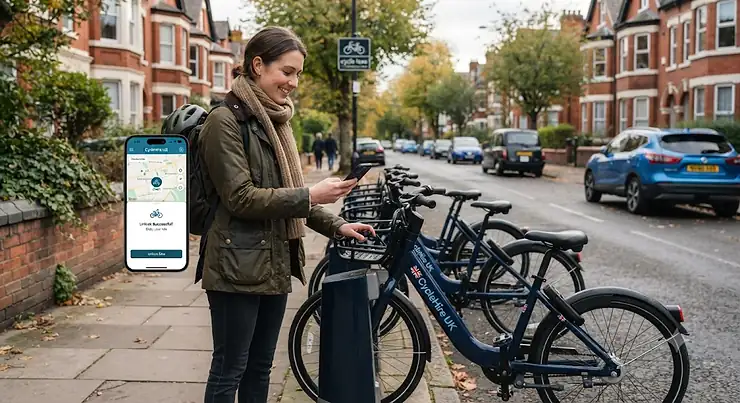
Somewhere between “whose turn is it to ride the ebike to the station” and “I’ve left my keys at work again,” most households eventually bump into the same small headache: one bike, several riders, and no sensible way to hand over access. That’s precisely the gap an electric bike shared digital key app is built to close. In plain terms, an electric bike shared digital key app is a smartphone application that turns your phone into your ebike’s key, then lets you grant, limit, or revoke that access for other riders without ever cutting a spare. No more juggling a single fob between three people, and no more hoping nobody loses it down a drain.
This matters more than it might sound. According to the UK government’s own guidance, an electrically assisted pedal cycle only counts as a normal bicycle in the eyes of the law when it meets specific technical criteria, which is worth knowing before you start handing riding privileges to teenagers, housemates, or weekend guests, as set out in the government’s official EAPC guidance. Sharing an ebike responsibly isn’t just about convenience, in other words, it’s also about knowing who’s legally allowed to twist that throttle.
Below, you’ll find seven real products that do this well (or, in one case, do it in a way worth knowing about before you buy), plus practical guides on setting up household access, handing out temporary codes, and understanding the permission systems that separate the genuinely useful apps from the ones that just look flashy in the App Store screenshots. Whether you’re kitting out a family garage or lending your commuter bike to a mate for the weekend, there’s a setup here that fits.
Quick Comparison Table
Here’s the headline view before we dig into the detail. Every product below supports some form of app-based sharing, but the depth of that sharing varies enormously, and that’s really the whole story of this article.
| Product | Type | Sharing Method | Best For |
|---|---|---|---|
| VanMoof S6 | Ebike | Guest rider mode + 3-digit code | Couples & flatmates |
| Trek Allant+ 8 (Bosch Smart System) | Ebike | Main/secondary user tiers | Families wanting control |
| Cowboy 4 | Ebike | Shared login credentials | Simplicity seekers |
| Giant Explore E+ 1 | Ebike | PIN-based digital key | Commuter households |
| LINKA Original Smart Bike Lock | Lock | Invite-based access list | Any existing bike |
| I LOCK IT Smart Frame Lock | Lock | App sharing with revoke | Budget households |
| Segway Ninebot X-Series | Ebike | Single shared account | Tight budgets |
Looking across the table, a clear pattern emerges: the products with dedicated permission tiers, like the Trek Allant+ 8, tend to sit at a higher price point than those relying on simple shared logins, like the Cowboy 4 or Segway Ninebot X-Series. That’s not a coincidence, since building granular access control into a Bluetooth security system is genuinely more complex engineering than letting two phones share one password. If you only need one other person to occasionally borrow the bike, the cheaper approach might be all you need; if you’re managing a household of riders with different needs, it’s worth paying for the tiers.
💬 Just one click — help others make better buying decisions too!😊
Top 7 Electric Bike Shared Digital Key Apps: Expert Analysis
1. VanMoof S6 — best all-in-one guest rider digital key
The standout here is that VanMoof built guest access into the bike’s DNA rather than bolting it on as an afterthought. Riders unlock the VanMoof S6 with a tap through the VanMoof app, and the owner can invite a guest rider who receives a personal three-digit unlock code, so nobody needs to hand over a phone or a physical key. The bike also pairs with Apple’s Find My network, meaning that if a shared rider forgets where they left it, tracking it down doesn’t require reopening the VanMoof app at all.
Guest riders get access to motor assistance, gears, lights, and sound settings, but they can’t alter the unlock code or bike settings themselves, which is a sensible line to draw. That matters in practice, since a household with a teenager and a visiting cousin can share the same bike without either of them accidentally reconfiguring the motor profile mid-ride.
Reviewers consistently note that VanMoof’s connected features are the brand’s biggest selling point and its biggest liability at once. Its 2023 bankruptcy left owners genuinely worried about losing app access to their own bikes, a saga widely covered at the time, including by BikeRadar, and it’s a useful cautionary tale for anyone about to bet a family’s cycling setup on one company’s servers staying online.
Pros:
- ✅ Guest rider mode built directly into the app
- ✅ Apple Find My integration for shared-bike tracking
- ✅ Clean one-tap unlock experience for every rider
Cons:
- ❌ Past server issues have raised real reliability concerns
- ❌ Guest riders can’t customise their own riding profile
Prices for the VanMoof S6 typically sit in the £2,000-£2,300 range at the time of research, and given the sharing features on offer, it earns its premium tag for households that want a single bike with genuinely flexible access.
2. Trek Allant+ 8 — most granular multi-user permissions
What most buyers overlook about Bosch Smart System bikes like the Trek Allant+ 8 is that the sharing controls live in the eBike Flow app rather than in Trek’s own software, which means the same permission structure works across dozens of Bosch-powered brands. The main user retains full control, including firmware updates and the ability to lock the battery remotely, while secondary users get near-complete riding functionality without the power to change settings or invite further riders themselves.
On paper, this is the most deliberately tiered system in this list. Up to five secondary users can be invited via a shareable link, and the owner can revoke any individual’s access at any point through the app’s settings menu, without needing to touch the bike itself. That’s a genuinely useful feature for a family bike that gets passed between parents, older kids, and the occasional dog-walking grandparent.
Aggregated user feedback around Bosch’s eBike Flow platform highlights the SingleKey ID login as both a strength and a minor friction point: it centralises account management across multiple Bosch-powered bikes, but it does add an extra account-creation step for anyone new to the ecosystem.
Pros:
- ✅ True tiered permissions, not just shared logins
- ✅ Works across many Bosch Smart System bike brands
- ✅ Owner can revoke individual access instantly
Cons:
- ❌ Full sharing functions require a Flow+ subscription
- ❌ Extra account setup step via SingleKey ID
Expect prices in the £3,500-£4,000 range for this specification, positioning it firmly as the premium, family-governance option in this line-up.
3. Cowboy 4 — simplest one-tap sharing for couples
The Cowboy 4‘s standout feature is refreshing honesty: rather than building a complex permission system, Cowboy simply lets a second rider log into the same account on their own phone. Only one phone can hold the Bluetooth connection at a time, so the app functions less like a household management tool and more like a single digital key that gets handed back and forth.
In practice, this means the digital key itself doubles as the unlock mechanism, the ride tracker, and the theft alarm trigger, all wrapped into one encrypted connection unique to the rider currently paired. For two people sharing one bike between a couple, that simplicity is arguably a feature rather than a limitation; there’s no permissions matrix to configure, just a login to share.
Here’s what to weigh before going this route: because it’s account sharing rather than tiered access, both riders see each other’s full ride history, and there’s no way to give a guest limited-time-only access without also giving them your account password. Reviewers on the app stores note the pairing process is quick and the interface responsive, though the shared-login approach is clearly aimed at couples or close housemates rather than wider family groups.
Pros:
- ✅ Genuinely simple setup with no tiered menus
- ✅ Fast, responsive Bluetooth pairing every time
- ✅ Bike battery keys available as a backup unlock
Cons:
- ❌ Only one phone can connect at any moment
- ❌ No way to limit a guest’s account access
Prices for the Cowboy 4 generally fall in the £2,100-£2,400 range, making it a mid-range pick best suited to two-person households rather than larger families.
4. Giant Explore E+ 1 — PIN-based digital key with Find My tracking
The Giant Explore E+ 1‘s RideControl system stands out for using a personalised PIN as the digital key itself, which is a neat trick: rather than relying purely on Bluetooth proximity, the rider sets a PIN that both locks the motor’s pedal-assist and, on many models, integrates with Apple’s Find My network for continuous location tracking. That combination of “immobiliser plus tracker” is exactly what a family bike parked outside a school or train station benefits from.
Based on the spec comparison with rivals in this list, Giant’s approach leans toward simplicity over granular tiers: any rider who knows the PIN can unlock and ride, and there isn’t a separate secondary-user status limiting what they can adjust. That’s a sensible trade-off for households where trust is already high, such as parents sharing a bike with older teenagers, but less useful if you need to restrict a specific guest’s settings access.
What the spec sheet won’t tell you, but user reports suggest, is that the disabled pedal-assist while locked is a genuinely effective deterrent against opportunistic theft, since a bike that won’t move under its own power is far less appealing to grab and go.
Pros:
- ✅ PIN-based key needs no phone to unlock
- ✅ Apple Find My tracking built into recent models
- ✅ Instant alarm if the bike is moved while locked
Cons:
- ❌ No tiered permissions for different household riders
- ❌ PIN alone can’t restrict what a rider changes
Typical pricing sits in the £2,800-£3,300 range, placing this firmly in premium commuter territory, with strong value for households prioritising security over permission granularity.
5. LINKA Original Smart Bike Lock — best retrofit lock for sharing any bike
Unlike the previous four entries, the LINKA Original Smart Bike Lock isn’t a bike at all, it’s a Bluetooth-enabled frame lock you fit to whatever bike you already own, which makes it the most flexible sharing solution on this list by a distance. Approach the bike with the app running and it auto-unlocks; walk away and it re-secures itself, all without a single physical key changing hands between household members.
The genuinely clever part is the sharing structure. The lock owner can grant remote access to specific people through the app’s invite system, and crucially, can revoke any individual’s access at any time from the settings menu, without needing to reset a shared code that everyone else would then need to relearn. There’s also a Phoneless Access Code, a numeric backup that works when someone’s phone battery has died, which solves one of the more obvious failure points of app-only locks.
Reviewers consistently flag the ART-2 security certification as solid but not top-tier, meaning this suits households more worried about convenience and casual opportunistic theft than determined angle-grinder attacks, a distinction covered in detail by independent testing from Cycling Weekly.
Pros:
- ✅ Individually revocable access for each shared rider
- ✅ Phoneless backup code for a dead battery
- ✅ Works on virtually any existing bike frame
Cons:
- ❌ ART-2 rating trails dedicated heavy-duty chain locks
- ❌ Best paired with a secondary lock for parking
At around £150-£200, it’s genuinely accessible, and for anyone who already owns an ebike but wants proper shared-access control bolted on, this is the pick worth checking first.
6. I LOCK IT Smart Frame Lock — best motorised auto-unlock for households
The I LOCK IT Smart Frame Lock‘s standout trick is that it’s fully motorised, meaning the lock itself physically retracts and extends via a small motor rather than needing a manual twist, so unlocking really is as simple as walking up to the bike. For a household where kids or less tech-confident relatives are borrowing the bike, that one-motion simplicity removes a common point of confusion.
Sharing works through the app’s built-in access system, where the primary account holder can extend digital keys to family and friends and remove them again just as easily, all without physically handing over a fob. The lock also carries a 110dB alarm with a pre-alert stage, so any tampering attempt while it’s shared out to a guest still triggers the same protection the owner would get.
Here’s what to weigh: the aggregated review sentiment around retrofit smart frame locks generally, including I LOCK IT, is that the electronics are a genuinely welcome convenience upgrade but shouldn’t be relied on as sole theft protection for an expensive ebike, since the frame lock alone doesn’t secure the bike to a fixed object.
Pros:
- ✅ Fully motorised unlock needs no manual effort
- ✅ 110dB alarm with pre-alert theft detection
- ✅ Easily retrofitted to almost any existing bike
Cons:
- ❌ Frame lock alone won’t stop determined bike theft
- ❌ Best used alongside a proper chain or D-lock
Expect a price in the £220-£280 range, which puts it slightly above LINKA but reflects the added convenience of motorised operation, a genuinely nice touch for households sharing across generations.
7. Segway Ninebot X-Series eBike — budget pick, single shared login
Included here deliberately as the honest budget option, the Segway Ninebot X-Series eBike uses the Segway-Ninebot app’s straightforward approach: multiple family members can share one bike by logging into the same account on their own phones, similar in spirit to Cowboy’s method. The catch, and it’s worth knowing upfront, is that only one device can be actively paired at a time, so the current rider needs to disconnect before the next person’s phone will pair successfully.
This is genuinely the most budget-friendly route into app-controlled sharing in this list, and it works fine for households that mostly take turns rather than needing simultaneous, independently tiered access. Remote unlock functionality even lets the account holder unlock the bike for a rider who isn’t within Bluetooth range, useful if a family member’s phone battery has died but they’ve still got the physical bike in front of them.
What most buyers overlook here is that shared-login systems like this one mean every rider sees the same ride history and settings, with no way to grant a guest limited or time-boxed access. If your household genuinely needs individually revocable permissions, this isn’t the pick, but if budget is the priority and everyone involved is already trusted, it’s a sensible entry point.
Pros:
- ✅ Genuinely budget-friendly route into app sharing
- ✅ Remote unlock works even outside Bluetooth range
- ✅ Simple shared-account setup with no extra tiers
Cons:
- ❌ Only one phone can pair at any given time
- ❌ No individual or time-limited guest permissions
Pricing typically lands in the £900-£1,200 range, making it the clear value pick for households prioritising cost over permission control.
Household Electric Bike App Unlock: Setting Up Family Access
Getting household electric bike app unlock working smoothly is less about the technology and more about a bit of upfront housekeeping, honestly. Start by deciding who the “main” account holder is, since every system in this list, from VanMoof to Bosch’s eBike Flow, requires one person to register ownership before anyone else can be invited in. That person becomes the one who can revoke access later, so pick someone who’ll actually still be in the household in a year’s time.
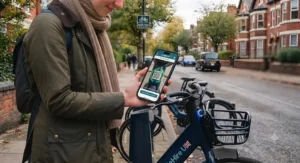
Next, walk through the invite flow with each family member present, rather than sending links and hoping for the best. Most apps generate a shareable invite link or QR code, and having the new rider accept it on their own phone, in front of you, avoids the classic mistake of an invite expiring unused after 24 hours, which is a common limitation on several platforms. Once accepted, do a test unlock together at the bike itself so everyone understands the physical unlock gesture, whether that’s a tap, a PIN entry, or a Bluetooth auto-unlock as you approach.
A common mistake in the first month is forgetting to update notification settings, which means every household member gets pinged every time anyone else unlocks the bike. Most apps let the main user adjust this per-rider in settings, so it’s worth doing early rather than living with a phone that buzzes every time your teenager pops to the shops. Finally, write down the phoneless backup code somewhere physical, not just in the app, since a dead phone battery shouldn’t mean a stranded rider.
Real-World Scenarios: Who Actually Needs to Share an Ebike Digital Key
If you’re a commuting couple sharing one bike between a train station and a home office two days a week each, the priority is straightforward account handover, which makes something like the Cowboy 4‘s shared-login approach genuinely sufficient; you don’t need five permission tiers for two trusted adults who already share a bank account.
If you’re a family with two teenagers and occasional visiting grandparents, the calculation changes. You’ll want individually revocable access, ideally with some restriction on what each secondary rider can adjust, which is exactly where the Trek Allant+ 8‘s tiered Bosch system or VanMoof S6‘s guest rider mode earns its higher price tag. Being able to remove just one teenager’s access after they’ve left the bike unlocked outside college twice in a fortnight, without disturbing anyone else’s access, is worth paying for.
If you’re renting out a spare room and want your lodger to occasionally use a house bike, a retrofit lock like LINKA or I LOCK IT on an existing bike is arguably the smartest route, since it separates the sharing decision from the bike purchase entirely. You keep your existing bike, add the lock, and grant temporary access without registering a whole new ebike account in someone else’s name. And if you’re simply budget-constrained and everyone in the household is genuinely trusted, the Segway Ninebot X-Series‘s single shared account removes complexity in exchange for a lower price, which is a perfectly reasonable trade-off for the right household.
Temporary Access Codes: Sharing With Guests, Dog Walkers and Delivery Riders
Temporary access codes solve a genuinely specific problem: you don’t want to permanently register your dog walker, your visiting cousin, or a one-off delivery rider as a full household user, but you also don’t want to hand over your phone for the afternoon. Here’s how the better apps in this list handle it, and what to do when they don’t.
Problem one: your app only supports permanent invites, not time-limited ones. The workaround here is to invite the guest as normal, then manually revoke their access the same evening from the settings menu, a two-minute job on platforms like LINKA or Bosch’s eBike Flow app, both of which show a clear “revoke access” option per user.
Problem two: the guest doesn’t have (or want) the app installed for a single afternoon’s ride. This is where PIN-based systems like the Giant Explore E+ 1‘s RideControl genuinely shine, since a temporary numeric code can be shared verbally or by text, with no app download required on the guest’s end at all.
Problem three: you’re lending the bike while you’re away and can’t be present to revoke access afterwards. Look specifically for remote revocation, the ability to cancel someone’s access from your own phone even when you’re nowhere near the bike, which VanMoof, Bosch, and LINKA all support, but shared-login systems like Cowboy and Segway Ninebot genuinely don’t, since revoking there means changing the whole account password.
Problem four: you want a delivery rider or tradesperson to move the bike once, with zero ongoing access. The phoneless access code feature on locks like LINKA is arguably the cleanest answer here, a one-time numeric code that doesn’t require registering the person in the app at all.
How to Choose an Electric Bike Shared Digital Key App
Choosing the right share ebike access app comes down to matching the permission model to how your household actually behaves, not to whichever product has the flashiest marketing. Here’s the expert reasoning behind each step.
- Count your regular riders first. Two people sharing one bike need far less than a family of five, so start by being honest about who actually needs access day-to-day.
- Decide whether you need revocable permissions. If trust is already total and permanent, a shared-login system saves money; if riders will change over time, individually revocable access is worth paying for.
- Check for a phoneless backup. A digital key that only works via smartphone is one dead battery away from a stranded rider, so a PIN or PAC-style backup matters more than it first seems.
- Weigh subscription costs honestly. Bosch’s Flow+ and similar premium tiers add an ongoing cost on top of the bike itself, which changes the total cost of ownership meaningfully over several years.
- Consider whether you need a new bike at all. If you already own a bike you’re happy with, a retrofit lock like LINKA or I LOCK IT often solves the sharing problem for a fraction of an ebike’s price.
- Test the invite flow before committing. Read recent app store reviews specifically about the sharing feature, since general app ratings don’t always reflect how smoothly the permissions system behaves in practice.
- Factor in Bluetooth range and reliability. Reviewers consistently note that Bluetooth-only systems can be temperamental in dense urban areas with lots of competing signals, so a backup unlock method isn’t a luxury.
Digital Key Permissions Explained: Owner vs Secondary Riders
Digital key permissions are, at their core, a question of who can do what once they’re granted access, and this is where the products in this list diverge most sharply. On a tiered system like Bosch’s eBike Flow, the main user retains exclusive control over firmware updates, battery lock settings, and the ability to invite or remove other riders, while secondary users get essentially full riding functionality without any of that administrative power. That distinction matters practically: a secondary user genuinely cannot accidentally brick the bike’s firmware or lock everyone else out.
On simpler systems, the concept of “secondary rider” doesn’t really exist in a technical sense, since sharing means sharing the same login credentials entirely. Reviewers consistently note this isn’t necessarily worse, just different: for a two-person household, the overhead of a formal permissions system can feel like unnecessary friction, whereas for a five-person household it becomes essential.
What most buyers overlook is that permission granularity also affects data privacy between household members. On account-sharing systems, every rider sees every other rider’s full trip history, speed data, and location logs, since it’s genuinely one account. On tiered systems, secondary users typically only see their own ride data, which is worth considering if you’d rather your teenager’s late-night ride home wasn’t automatically visible to the whole family group.
Multi-User App Accounts vs Individual Digital Keys
The core question here is whether your household wants one shared account that everyone logs into, or individually issued digital keys tied to separate identities within the same app. Both approaches genuinely work, but they solve slightly different problems, and the table below breaks down the practical difference.
| Factor | Multi-User Accounts | Individual Digital Keys |
|---|---|---|
| Setup complexity | Low — one shared login | Moderate — invite each rider |
| Revoking one person’s access | Difficult, needs password change | Simple, one tap in settings |
| Ride data privacy | Shared across all users | Usually private per rider |
| Cost | Often included free | Sometimes needs a subscription |
| Best For | Cowboy 4, Segway Ninebot X-Series | VanMoof S6, Trek Allant+ 8, LINKA |
Interpreting this side by side, the trade-off is really speed versus control. Multi-user accounts, like those on the Cowboy 4 and Segway Ninebot X-Series, get a second rider up and running in minutes, but they sacrifice the ability to quietly remove just one person’s access down the line. Individual digital keys, the approach behind VanMoof S6, Trek Allant+ 8, and LINKA, take a few extra minutes to set up properly but pay that time back the moment a housemate moves out or a teenager needs their access curbed after one too many missed curfews.
Common Mistakes When Sharing an Ebike Digital Key
The single most common mistake is assuming a shared digital key app works identically to a spare physical key, when in practice it introduces a new dependency: the app’s servers. VanMoof’s 2023 bankruptcy is the clearest real-world illustration of this risk, when owners genuinely worried that server shutdowns could leave them locked out of bikes they’d paid thousands of pounds for, a situation reported extensively at the time and worth reading about via BikeRadar’s coverage before committing to any single ecosystem.
A second frequent error is skipping the phoneless backup setup entirely, since it feels unnecessary on day one. Then a phone dies mid-commute, or a guest rider’s battery runs flat three miles from home, and suddenly the “convenient” digital key is the reason nobody can get moving. Every product in this list that offers a PIN or PAC-style backup is worth configuring the same day you set up sharing, not weeks later.
A third mistake, particularly common with shared-login systems, is never actually removing access once someone no longer needs it. Ex-housemates, past dog walkers, and old guest riders quietly retaining access is a genuine security oversight that a five-minute settings review, done quarterly, easily fixes. Finally, households frequently underestimate Bluetooth range limitations, expecting an app-based key to work from across a car park when most systems need the phone within a few metres, which catches out more first-time users than any other single issue.
Features That Actually Matter (And Those That Don’t)
Cutting through the marketing, a handful of features genuinely change day-to-day life with a shared ebike, and a fair few don’t earn their billing. Individually revocable access matters enormously for households larger than two people; a phoneless backup code matters for absolutely everyone, since phone batteries die at the worst possible moments; and remote revocation, the ability to cancel someone’s access without being near the bike, matters more than it first appears once you actually lend the bike to someone occasionally.
What matters less, honestly, is the social or gamification layer that several apps bolt on, things like leaderboards, community ride-sharing feeds, and achievement badges. They’re pleasant enough, but they don’t affect whether your household can actually share the bike safely and sensibly, and no amount of badge-collecting compensates for a permission system that can’t revoke one person’s access without resetting everyone’s.
Similarly, headline top speeds and motor wattage figures, while relevant to the ride itself, have essentially nothing to do with how well the sharing system works, and it’s easy to get distracted comparing power figures when the actual differentiator between these seven products is entirely about who controls access and how easily that control changes.
Long-Term Cost & Maintenance of App-Connected Ebikes
The upfront price of any of these products is only part of the total cost of ownership, and it’s worth doing this sum before buying rather than after. Subscription-gated sharing, as seen with Bosch’s Flow+, adds a recurring cost specifically to unlock the multi-user permissions this whole article is about, meaning the headline bike price understates what full household sharing actually costs over several years.
| Product | Sharing Cost Model | Ongoing Fee |
|---|---|---|
| VanMoof S6 | Included with bike | None disclosed |
| Trek Allant+ 8 | Requires Flow+ subscription | Recurring, main user only |
| Cowboy 4 | Included, shared login | None |
| LINKA / I LOCK IT | Included with lock purchase | None |
Reading this table alongside the earlier price ranges, the picture sharpens: a Trek Allant+ 8 buyer isn’t just paying £3,500-£4,000 upfront, they’re committing to an ongoing subscription specifically to keep sharing functional for secondary riders, which is worth factoring into a five-year cost comparison against a VanMoof S6 or a retrofit LINKA lock, both of which include sharing at no extra recurring cost. Maintenance-wise, Bluetooth locks and app-connected motors also benefit from occasional firmware updates, which every product here handles automatically over the air, so that particular chore, at least, is genuinely set-and-forget.
Safety, Security and Regulations Guide
Before handing out access to anyone, it’s worth being clear on what UK law actually says about who can ride what. An electrically assisted pedal cycle only qualifies for the same legal treatment as an ordinary bicycle, meaning no licence, registration, or insurance requirement, when it meets specific criteria including a maximum continuous motor output and an assistance cut-off speed, both of which are laid out clearly by Cycling UK’s regulatory guidance. It’s genuinely worth checking your specific model against this before sharing riding rights with someone under 14, since EAPCs legally cannot be ridden by anyone younger than that regardless of what the app permits.
On the security side, remember that a digital key app protects against casual, opportunistic access, not against a determined thief with the right tools. Independent lock testing consistently shows that Bluetooth-enabled frame locks, however convenient for household sharing, generally trail dedicated chain or D-locks in raw cutting resistance, which is why pairing something like LINKA or I LOCK IT with a proper secondary lock for longer parking stints remains sound advice rather than overcaution.
Finally, treat your sharing app’s account security with the same seriousness as online banking. Use a strong, unique password for the main account, enable two-factor authentication where it’s offered, and resist the temptation to share your login via a screenshot or a quick verbal readout, since that’s genuinely the easiest way for access to spread further than intended.
✨ Don’t Miss These Exclusive Deals!
🔍 Take your household cycling setup to the next level with these carefully selected picks. Click on any highlighted item to check current pricing and availability. These tools will help you build a genuinely fair, hassle-free bike-sharing routine your whole family will actually stick to!
FAQ
❓ What is an electric bike shared digital key app?
❓ Can two people use the same ebike app account?
❓ How do I give someone temporary access to my ebike?
❓ Is a shared digital key app safe for an ebike?
❓ Do I need a new ebike to share digital key access?
Conclusion
Sharing an ebike well isn’t really about the bike at all, it’s about the small system of trust and access sitting behind it, and that’s exactly what a good electric bike shared digital key app quietly manages. Whether that means the tiered permissions of Trek Allant+ 8‘s Bosch Smart System, the guest rider mode built into VanMoof S6, or a simple retrofit lock like LINKA bolted onto a bike you already own, the right choice comes down to how many people actually need access and how much control you want over each of them individually.
Budget-conscious households shouldn’t feel short-changed either, since the Segway Ninebot X-Series and shared-login systems like Cowboy 4 genuinely work well for smaller, high-trust groups, just without the individually revocable access that larger families tend to need. And whichever route you take, remember that a digital key is a convenience layer, not a substitute for sound physical security or a working knowledge of what UK law says about who’s actually allowed to ride.
Get the setup right once, and the daily friction of “who has the key today” simply disappears, replaced by a system that quietly does its job in the background while everyone in the household just gets on with riding.
Recommended for You
- Electric Bike App Speed Limiter: 7 Brilliant UK Picks for 2026
- Electric Bike With Crash Detection SOS: 7 Smart Picks for 2026
- Electric Bike Geofencing for Fleet Riders: 7 Best Trackers 2026
Disclaimer: This article contains affiliate links. As an Amazon Associate, I earn from qualifying purchases. If you purchase products through these links, we may earn a small commission at no additional cost to you.
✨ Found this helpful? Share it with your friends! 💬🤗
